“Selecting the right Huck bolt distributor is critical for project success. Learn about Huck lockbolts, bobtail options, blind fasteners, and key evaluation criteria for reliable supply”.
When your project calls for high-strength, vibration-resistant fastening, the choice of distributor matters as much as the fasteners themselves. A substandard supplier can introduce counterfeit products, installation failures, and expensive rework that far outweighs any upfront savings.
For engineers and procurement professionals working in rail, mining, construction, or heavy fabrication, selecting the right partner requires careful evaluation. This guide outlines what to look for when choosing a distributor and why product authenticity and technical support should be non-negotiable.
Understanding the Product Range
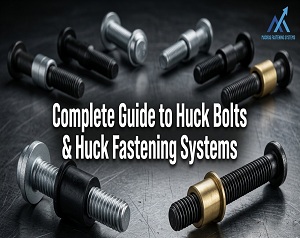
Before evaluating distributors, it helps to understand the key fastener families. Huck lockbolts are two-piece fasteners with a hardened pin and ductile collar. During installation, the collar is swaged into the pin’s annular grooves, forming a permanent mechanical lock that withstands extreme vibration without loosening.
The swaging process delivers consistent clamp force without relying on thread friction or torque. Within this family, Huck bobtail lock bolts represent an advanced evolution. Unlike traditional designs, the BobTail has no break-off pintail, eliminating material waste, reducing installation noise, and minimizing corrosion points.
Specialized tools set BobTail fasteners in under two seconds, twice as fast as standard types, delivering major labor cost reductions. Huck blind fasteners enable one-sided installation when the back is inaccessible, making them ideal for aircraft interiors, HVAC, and enclosures.
A distributor with comprehensive inventory across all three categories, lockbolts, bobtail options, and blind fasteners, demonstrates the capability to fulfill varied project needs with technical confidence.
Advantages of Huck Bolts over Traditional Bolts
Understanding the advantages of Huck bolts over traditional bolts helps clarify why distributor selection is so critical. Conventional threaded fasteners rely on friction and torque to maintain clamp force. Under transverse vibration, thread flanks slide against each other, causing the nut to rotate and loosen over time. Huck bolts eliminate this failure mode entirely.
The engineering advantages are substantial. Huck bolts have 30% more cross-sectional area and a larger root radius than conventional bolts, delivering up to five times the fatigue strength. They can be taken to higher preload values because they are not subjected to torsion during installation. Once installed, they require no periodic torque checks, eliminating maintenance costs and safety risks associated with retorquing in hazardous areas. Installation is also significantly faster—saving over 40% in installation time compared to traditional bolting methods.
Criteria for Selecting a Distributor
Authorization and Traceability
The first and most critical criterion is manufacturer authorization. An authorized distributor has a direct certification from the original equipment manufacturer, which comes with strict quality controls, factory training, and full product traceability. Every fastener is sourced directly from the original manufacturer, not grey markets, ensuring it meets OEM mechanical specifications.
Authorized distributors provide batch traceability linking each fastener to its heat lot and production date. This documentation is essential for safety-critical applications in rail, aerospace, mining, and defense. Local distributors without authorization cannot offer this level of accountability.
Technical Knowledge and Support
A knowledgeable distributor goes beyond order fulfillment. The sales team should be able to explain why a standard lockbolt might be preferred over a bobtail design for a specific application, or guide you toward the right grip length and diameter for your material stack. They should understand the harsh realities of your industry—whether you are in mining, rail wagon manufacturing, or structural steel construction—and recommend solutions accordingly.
Inventory Depth and Availability
Heavy industries operate on tight schedules. A reliable distributor maintains deep inventory levels across various diameters and grip lengths, ensuring they can fulfill orders for both standard and specialized fasteners immediately. They should also stock authentic spare parts for installation tooling, including nose assemblies and swage anvils.
Verification Steps before Placing an Order
Before committing to a supplier, follow this verification checklist:
- Ask for written authorization proof from the original manufacturer.
- Request a sample traceability document for a specific part number.
- Inspect packaging, genuine boxes have branded labels and batch stickers.
- Call the manufacturer to verify the distributor’s authorized status.
Conclusion
Choosing a distributor is not just about transaction costs; it is about risk management. For safety-critical, high-vibration, or regulated applications, an authorized Huck bolt distributor is the only responsible choice.
The small upfront premium eliminates risks of counterfeits, rework, and liability. By prioritizing authorization, technical knowledge, and industry fit, you ensure your structures stay secure and your projects remain on schedule.